Azure ATP (Defender for Identity) Domain Controller Sensor Architecture and Lateral Movement Detection
A 2018 identity threat detection blueprint using Azure ATP sensors on Active Directory Domain Controllers to catch Pass-the-Hash, Kerberoasting, Golden Ticket, and DCSync attacks.
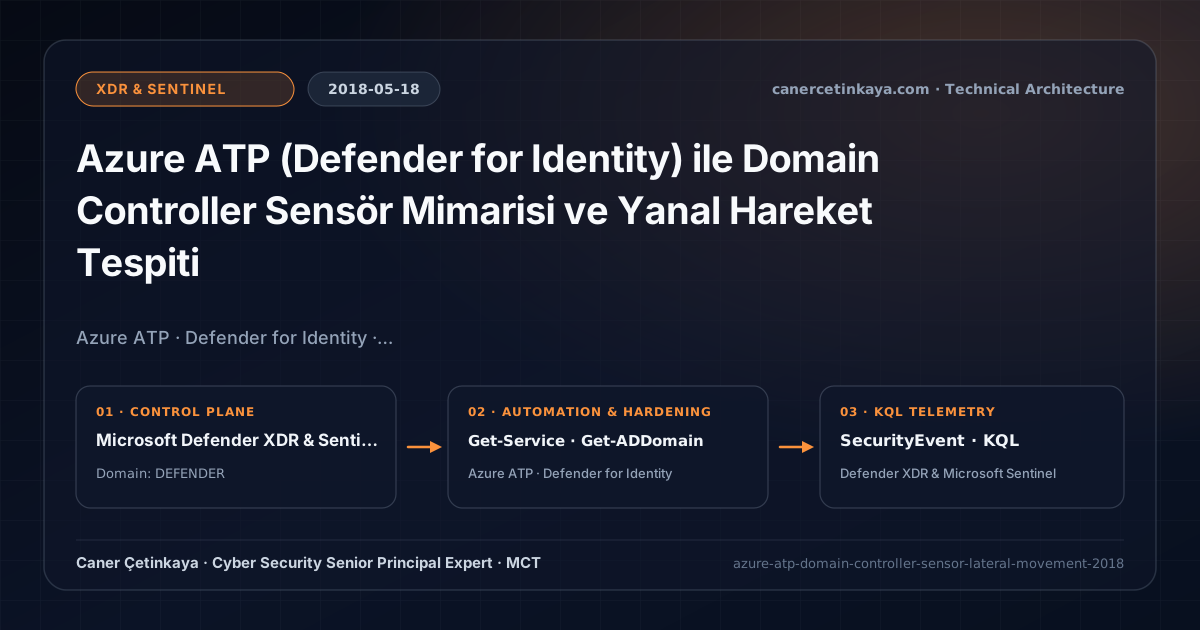
Executive Summary and Active Directory Threat Context
Once endpoint protection blocks traditional executable payloads, sophisticated adversaries pivot directly toward Active Directory Domain Controllers using fileless identity lateral movement. Techniques such as Kerberoasting, DCSync credential replication, and Overpass-the-Hash leave virtually zero binary footprint on disk. Azure ATP (now Defender for Identity) inspects live Kerberos, NTLM, DNS, and RPC wire traffic directly on each Domain Controller to surface identity compromises within seconds.
From an architectural evolution standpoint, this foundational design connects directly to modern platform controls. Released in 2018 as Azure Advanced Threat Protection (Azure ATP), this capability operates today as Microsoft Defender for Identity inside Microsoft Defender XDR—feeding automated identity response workflows alongside Azure AD PIM Zero Standing Access.
Sensor Boundaries, Protocol Auditing, and Design Principles
- Direct DC sensors parse Kerberos (88), LDAP (389), DNS (53), and SAM-R/RPC calls to uncover DCSync replication abuse, Golden Ticket forgery, and Pass-the-Ticket movement.
- Network Name Resolution (NNR) correlates wire packets with Windows Event IDs 4776, 4768, and 4769 to map ephemeral attacker IP addresses accurately.
- Marking decoy accounts as Honeytokens provides near-zero false positive alerting whenever reconnaissance tools like BloodHound probe domain objects.
- Identity sensors on Domain Controllers and
Entra Connecthosts depend on tuned Advanced Windows Audit Policies and strict resource sizing so deep Kerberos/LDAP/NTLM inspection never degrades DC responsiveness.
Prerequisites, Domain Controller Dependencies, and RBAC
- Licensing: Enterprise Mobility + Security (EMS) E5, Microsoft 365 E5, or standalone Azure ATP / Defender for Identity.
- Infrastructure & RBAC: .NET Framework 4.7+ on all DCs and a dedicated read-only Directory Services Account (DSA) adhering strictly to least privilege.
- Audit GPO: Enforce Windows Advanced Audit Policy subcategories for Kerberos Authentication Service, Credential Validation, and Directory Service Changes.
Technical Verification, ADCS/Protocol Posture, and Controls
PowerShell Sensor Health and Hardening Audit
PowerShell script verifying Domain Controller audit subcategories and Azure ATP sensor services:
- Execution Environment and Prerequisites: Requires ActiveDirectory / RSAT / AD Sync / AD FS management host.
- Least Privilege and Operation Separation: Run with least-privilege inspection or scoped administrative permissions. All statements above are **read-only (
Get-*/Test-*/Search-*)** verification checks making no direct configuration edits; still validate module/network prerequisites in a test cohort first. - Security Control Mapped and Boundary Note: Verifies active policy state and guards against silent drift or mis-scoped rollouts without blind production changes.
# 1. Verify required Account Logon and DS Access advanced audit policies on DC
auditpol /get /category:"Account Logon","DS Access"

# 2. Validate Azure ATP sensor and updater Windows services health
Get-Service -Name "AATPSensor", "AATPSensorUpdater" -ErrorAction SilentlyContinue |
  Select-Object Name, Status, StartType

# 3. Inspect Deleted Objects container path used for DSA read access verification
Get-ADDomain | Select-Object DistinguishedName, DeletedObjectsContainer
Identity Threat Telemetry and KQL Verification Query
KQL threat hunt surfacing suspicious Kerberoasting (RC4 0x17) TGS requests across the forest:
// Execution Scope: Read-only hunting/audit query (Log Analytics Reader / Security Reader)
// Data Source: Azure Monitor Agent (AMA) Windows Security Events -> Log Analytics / Sentinel (SecurityEvent)
SecurityEvent
| where TimeGenerated > ago(7d)
| where EventID == 4769
| parse EventData with * 'TicketEncryptionType">' TicketEnc "</Data>" *
| where TicketEnc == "0x17"
| where TargetUserName !endswith "$" and TargetUserName !has "krbtgt"
| summarize RequestCount = count(), ServicesTargeted = dcount(ServiceName) by IpAddress, TargetUserName
| where ServicesTargeted >= 3 or RequestCount >= 10
| order by RequestCount desc
Critical Architectural Assessment, Production Risks, and Rollback Strategy
- Legacy WinPcap Conflicts: Outdated packet-capture drivers on Domain Controllers interfere with Npcap OEM installation; audit backup and monitoring agents first.
- Granting Domain Admin to DSA: The directory reader service account never requires Domain Admin rights; read-only permission plus Deleted Objects container access is sufficient.
- Risks Mitigated vs. Residual Limitations: MDI sensors and
ADCS(ESC1/ESC8) remediation detect and disruptGolden Ticket,DCSync, LDAP reconnaissance, and certificate-template escalation; however, they do not inspect pure cloud-only Entra token replay, legacy apps broken if NTLM/web-enrollment endpoints are removed prematurely, or DCs lacking Windows Advanced Audit policies. - New Dependencies and Production Failure Modes: Fidelity depends on configured DC
Securityaudit SACLs, sensor sizing margins on busy Domain Controllers, outbound*.sensorapi.atp.azure.comHTTPS connectivity forv3, and verified ADCS client inventories before locking downESC8HTTP endpoints. - Rollback and Pilot Validation Procedure: Stage
NTLMand weak-protocol cleanup through Windows audit-only logging (8004/4022events) first; keep GPO rollback snapshots for AD hardening changes and upgradev2 -> v3sensors one non-FSMO DC at a time.
Verified Primary Sources & Open-Source Repositories
This architectural guide was cross-corroborated against the official advisories, Microsoft Learn docs, and open-source PowerShell / KQL repositories below.
Multi-Channel Distribution Summary (X & LinkedIn Draft)
Toggle X (Twitter) & LinkedIn sharing drafts
Multi-Channel Distribution Summary (X & LinkedIn Draft)
Toggle X (Twitter) & LinkedIn sharing draftsPublished our 2018 Active Directory defense guide on Azure ATP DC sensor architecture, Kerberoasting detection, and DCSync alerts. #DefenderForIdentity #ADSecurity
Engineering Domain Controller threat visibility with Azure ATP (Defender for Identity): wire packet telemetry, least-privilege DSA accounts, Honeytokens, and KQL RC4 Kerberoasting hunts.