Defender for Cloud AI-SPM, Container Runtime, and Kubernetes Gated Deployment
Securing multicloud AI workloads (Azure OpenAI, Bedrock, Vertex) via AI-SPM Attack Paths while stopping vulnerable container images pre-production using Kubernetes Gated Deployment.
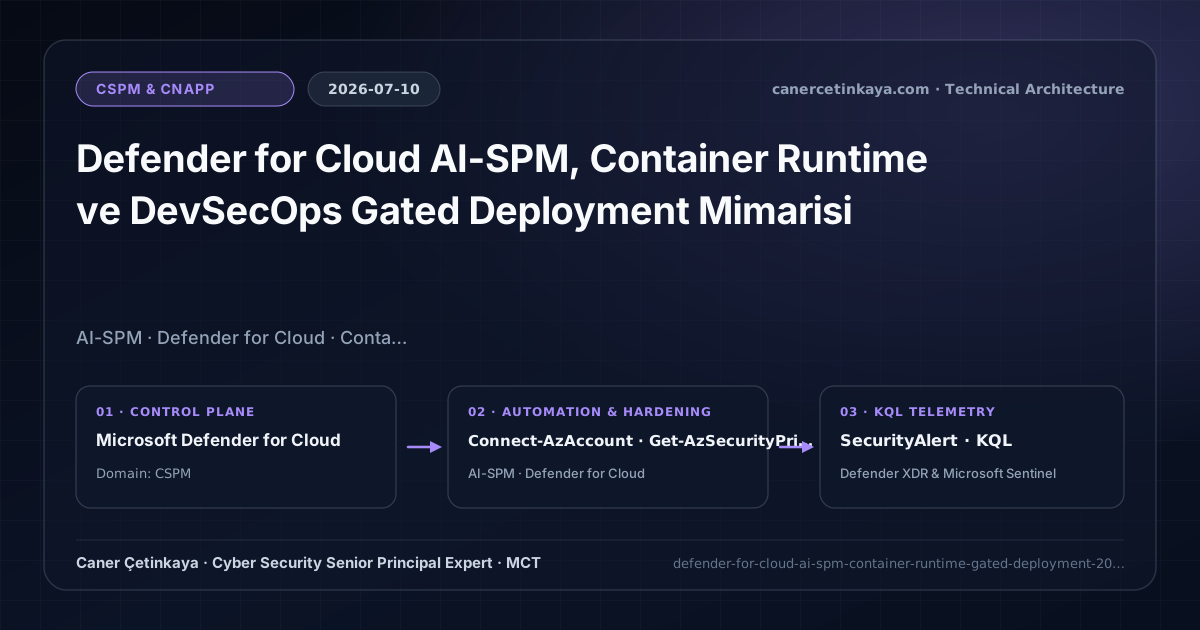
Executive Summary and Cloud Posture Context
As DevOps teams deploy containerized microservices and custom LLM agents across Azure AKS, AWS EKS, and GCP GKE multiple times daily, security teams confront two parallel hazards: unmanaged AI assets connected to sensitive private RAG storage, and container images carrying critical fixable CVEs slipping past CI checks into production pods. In 2026, uniting Defender for Cloud AI-SPM with Defender for Containers Gated Deployment prevents exposed models and unvetted container builds from ever entering production.
From an architectural evolution standpoint, this foundational design connects directly to modern platform controls. Adapting 2024’s Defender CSPM Attack Paths onto 2026 AI model registries and Kubernetes estates bridges runtime detection straight into Multicloud CSPM & DevSecOps CI/CD deployment gates.
Detection Boundaries, Asset Scope, and Design Principles
AI Security Posture Management (AI-SPM)discovers generative AI deployments across Azure AI Foundry/OpenAI, AWS Bedrock, and GCP Vertex AI to uncover exposed keys, missing prompt filters, and toxicAI Attack Paths.Defender for Containers eBPF Sensormonitors pod namespaces live at runtime for container escapes, crypto-miners, reverse shells, and drift binaries.Kubernetes Gated Deploymentintegrates Defender ACR/ECR/GAR vulnerability assessments directly into AKS admission webhooks to deny unvetted or critical-CVE container deployments.- Cloud and SaaS posture engines (
CSPM/SSPM), attack-path graphs, and OAuth governance must tie directly to concrete privilege reduction and IaC/PR gates rather than accumulating unactioned alert queues.
Prerequisites, Connector Coverage, and RBAC Separation
- Licensing:
Defender CSPMunlocks AI-SPM and multicloud Attack Paths;Defender for Containersunlocks eBPF runtime sensors, registry vulnerability scanning, and Kubernetes admission gating. - Cluster & RBAC: Enable the
Azure Policy Add-on for Kuberneteson AKS clusters alongside coordinatedSecurity Admin+AKS Cluster Adminexemption governance. - System Exemptions: Always preserve clean exemptions for core
kube-systemandgatekeeper-systeminfrastructure namespaces.
Technical Verification, Posture Score, and OAuth Audits
PowerShell Cloud and SaaS Posture Assessment
Auditing Defender CloudPosture & Containers plans and querying AI/Container unhealthy assessments in Resource Graph:
- Execution Environment and Prerequisites: Requires Az.*.
- Least Privilege and Operation Separation: Run with scoped Azure Reader (audit) / Contributor (state changes) privileges. All statements above are **read-only (
Get-*/Test-*/Search-*)** verification checks making no direct configuration edits; still validate module/network prerequisites in a test cohort first. - Security Control Mapped and Boundary Note: Verifies active policy state and guards against silent drift or mis-scoped rollouts without blind production changes.
# 1. Verify active Defender CSPM (CloudPosture) and Containers plan tiers
Connect-AzAccount
Get-AzSecurityPricing | Where-Object { $_.Name -in @("CloudPosture", "Containers") } |
  Select-Object Name, PricingTier, SubPlan, Extensions

# 2. Query Resource Graph for unhealthy AI and Container security assessments
Search-AzGraph -Query "securityresources | where type == 'microsoft.security/assessments' | where properties.displayName has_any ('container', 'Kubernetes', 'AI', 'OpenAI') and properties.status.code == 'Unhealthy' | summarize UnhealthyCount = count() by tostring(properties.displayName)"
Cloud Security Telemetry and KQL Query
KQL query auditing Defender for Cloud alerts targeting Kubernetes clusters, containers, and AI workloads:
// Execution Scope: Read-only hunting/audit query (Log Analytics Reader / Security Reader)
// Data Source: SecurityAlert table -> Defender XDR Advanced Hunting or Log Analytics / Sentinel workspace
SecurityAlert
| where TimeGenerated > ago(14d)
| where ProductName in ("Azure Security Center", "Microsoft Defender for Cloud")
| where ResourceId has_any ("managedClusters", "CognitiveServices", "MachineLearningServices") or AlertName has_any ("Kubernetes", "Container", "OpenAI", "AI")
| project TimeGenerated, AlertName, AlertSeverity, ResourceId, RemediationSteps
| summarize AlertCount = count() by AlertName, AlertSeverity
| order by AlertCount desc
Critical Architectural Assessment, Production Risks, and Rollback Strategy
- Blocking Production Deployments Over Unfixable Base-OS CVEs: Filter Gated Deployment Azure Policies strictly toward fixable (
only remediable) Critical/High vulnerabilities rather than upstream noise lacking patches. - Assuming Private Endpoint on an AI Model Protects Underlying Data Stores: AI-SPM traces complete attack paths back into public Blob/S3 buckets or overly permissive training roles.
- Risks Mitigated vs. Residual Limitations:
Defender CSPM, attack-path graphs,FIM, andShadow AIOAuth governance curb public cloud exposure, drift on sensitive host files, and illicit consent grants; however, they do not stop zero-day runtime exploits before patches/detections arrive, logic bugs in custom SaaS apps, or credential abuse on accounts outside connector RBAC scope. - New Dependencies and Production Failure Modes: Coverage relies on active multi-cloud read connectors (
AWS/GCP), endpoint/VM agents, andApp GovernanceAPI feeds. Blindly enabling automatic OAuth revocation or strict PR/deployment gates can interrupt authorized vendor workflows or release pipelines. - Rollback and Pilot Validation Procedure: Operate OAuth app governance and IaC admission gates in audit/alert mode before activating enforcement; export
Get-MgOauth2PermissionGrantbaselines and retain Defender policy exemptions to reinstate inadvertently paused integrations.
Verified Primary Sources & Open-Source Repositories
This architectural guide was cross-corroborated against the official advisories, Microsoft Learn docs, and open-source PowerShell / KQL repositories below.
Multi-Channel Distribution Summary (X & LinkedIn Draft)
Toggle X (Twitter) & LinkedIn sharing drafts
Multi-Channel Distribution Summary (X & LinkedIn Draft)
Toggle X (Twitter) & LinkedIn sharing draftsSecuring multicloud GenAI workloads with Defender AI-SPM and blocking vulnerable containers via Kubernetes Gated Deployment. #AI_SPM #DefenderForCloud #DevSecOps
Code-to-Cloud Guardrails for 2026: Hunting AI Attack Paths across Azure/AWS/GCP and enforcing fixable-CVE Kubernetes Gated Deployment.